
The PetBionic project, co-funded by COMPETE 2030 and featuring the participation of the i3N-Aveiro, is set to transform the lives of companion animals with severe injuries. The initiative aims to develop scalable, marketable, and optimized bionic prosthetics that go far beyond traditional implants.
The PetBionic project aspires to achieve a significant breakthrough in veterinary prosthetics by proposing the development of standardized, scalable, and commercially viable bionic limbs. The core innovation lies in the use of therapeutic coatings to optimize osseointegration, combined with the integration of sensors for real-time monitoring of biometric parameters—such as implant stability and bone density—using Artificial Intelligence for data analysis.
The project is the result of a diverse consortium bringing together crucial expertise:
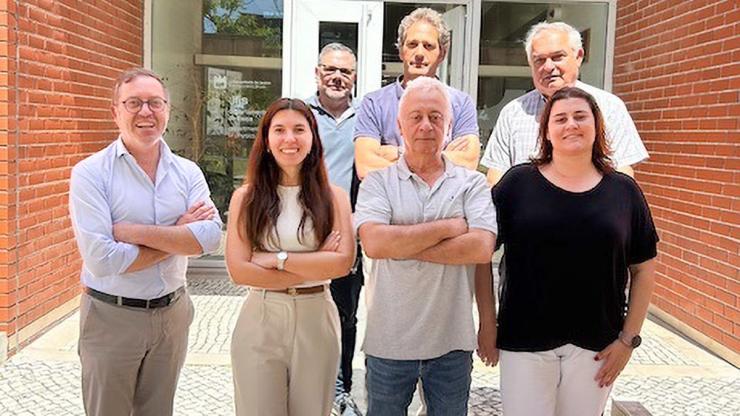
The initial phase of the project, dedicated to researching materials and their interaction with bone tissue, is led by Manuel Graça at the University of Aveiro. The team includes researchers Sílvia Soreto, Manuel Valente, Luís Cadillon, and Jorge Monteiro from the Institute of Nanostructures, Nanomodelling and Nanofabrication (i3N-FSCOSD) and the Department of Physics.
This research focuses on the study of:
Beyond overcoming current mechanical limitations by establishing an innovative connection between living tissue and prosthetic components, PetBionic embraces the One Health concept. The innovations developed for animals are expected to be eventually adapted for Human Medicine, illustrating the interconnectedness of human health, animal health, and environmental well-being.
More information: https://www.ua.pt/pt/projetos-id/1478

 Campus da FCT Quinta da Torre Campus de Santiago - Universidade de Aveiro
 (+351) 21 294 8562 (Lisboa)
 cenimat.secretariado@fct.unl.pt i3n.aveiro@ua.pt